
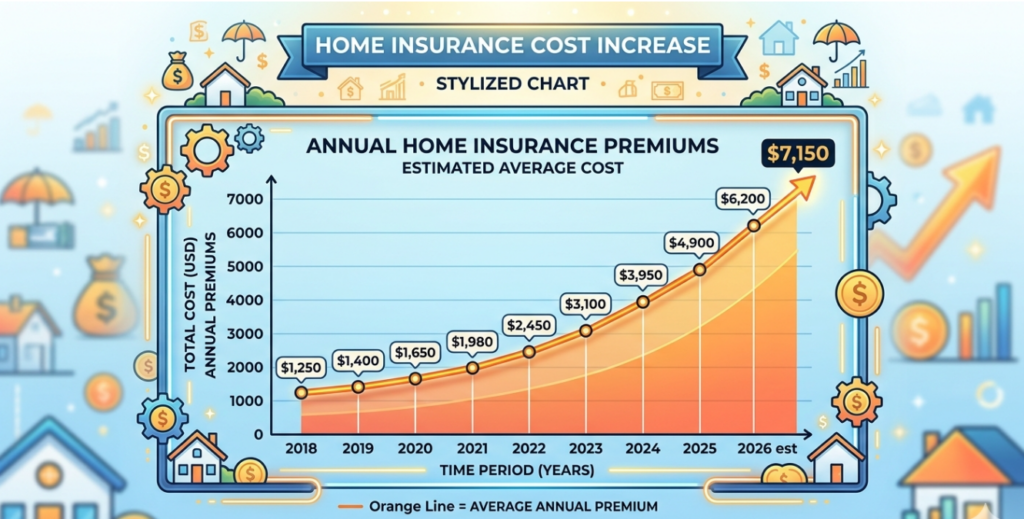
What does a a business insurance rate increase really mean?
A business insurance rate increase is a rise in the price an insurer charges for a given amount of risk. That sounds abstract, but it matters because many businesses use “rate” and “premium” like they mean the same thing. They do not.
Premium is your total bill. Rate is one ingredient inside that bill.
Rate vs. premium: the small wording difference that changes everything
Rate is the price per unit of risk. Premium is what you actually pay after the insurer applies that rate to your payroll, sales, property values, vehicles, or liability limits.
So yes, your premium can rise even if the market rate stayed flat. If your payroll grew, you added two vans, your building value was updated, or your revenue jumped, your exposure grew. More exposure usually means more premium.
That is why it helps to separate “the market got more expensive” from “your business got bigger” and from “your policy changed.” If you skip that step, every increase feels unfair, even when part of it is just math.
Why your renewal can rise even when headlines say prices are easing
Here’s where it gets interesting. Broad market headlines may say commercial insurance is calming down, and in some areas that is true. In fact, overall premiums decreased 2.0% in the Q2 2026 market survey from The Council of Insurance Agents & Brokers.
But that average hides a split market. Property has softened for many better-managed accounts, while umbrella, liability, and commercial auto are still under pressure. So if your business carries a lot of auto exposure or needs higher liability limits, your renewal can absolutely rise even while somebody else’s property-heavy account goes down.
The biggest reasons your premium went up this year
Most increases come from three buckets: claims cost more, risk conditions got tougher, and underwriters are being pickier at renewal. Put those together and the jump starts to make sense.
Claims cost more now, even when claim frequency is not the whole story
A claim that cost $40,000 a few years ago may now cost $55,000 or more. Building materials are pricier. Skilled labor is harder to find. Auto parts take longer to source. Medical treatment costs more.
So even if your business had the same number of losses, the insurer may still be paying more to settle each one. One burst pipe, one rear-end crash, one slip-and-fall, each now carries a bigger price tag. That pushes premiums up because insurers price for expected future losses, not just what happened last year.
Weather and catastrophe losses changed the math
Storms, floods, hail, wildfire, and hurricane losses changed pricing far beyond the exact building that got hit. If your property sits in a higher-risk area, underwriters may react with higher deductibles, tighter wind terms, lower sublimits, or higher premiums.
That pattern is especially familiar in Florida, where storm losses and reinsurance costs keep reshaping how carriers price and underwrite property risk. Even outside coastal areas, severe weather has become expensive enough that insurers look harder at roofs, drainage, construction type, and location than they used to.
Lawsuits are getting more expensive
Social inflation sounds technical, but the plain-English version is simple: lawsuits are getting costlier. Juries are awarding bigger verdicts, settlements are rising, and legal defense is more expensive.
That hits general liability and umbrella coverage especially hard. If your business has customer foot traffic, vehicles on the road, subcontractor exposure, or a public-facing operation, liability pricing may stay high even when property pricing gets a little relief.
Reinsurance and capacity still affect what you pay
Reinsurance is insurance for insurance companies. Carriers buy it to protect themselves from very large losses or catastrophe-heavy years.
If that back-end protection costs more, or if less of it is available, the effect often shows up in your renewal. Limits may be harder to get. Pricing may rise. Carriers may become less willing to write riskier accounts. It is not always visible on the declarations page, but it still shapes the number you pay.
Underwriters are looking harder at your risk quality
Underwriters now dig deeper into the condition and quality of your risk. That means roof age, electrical updates, prior claims, driver records, maintenance logs, sprinkler inspections, security, and property values all get more attention.
Insurers are also using more data tools than before. Aerial imagery, inspection reports, mapping data, and predictive models help them spot issues fast. If you want a clearer picture of what gets reviewed before a quote is offered, this is where most surprises start.
Why your increase may have nothing to do with a claim
This is one of the most frustrating parts of commercial insurance: you can have a clean loss history and still get hit with a bigger renewal. Annoying, yes. Unusual, no.
Your business changed, and the policy changed with it
If your payroll increased, your sales climbed, you added staff, bought equipment, opened a second location, expanded services, or put more vehicles on the road, your insurance exposure changed. Insurers charge based on that exposure because there is more to protect and more that can go wrong.
Sometimes the change is subtle. A contractor that starts handling larger jobs, or a retailer that begins offering delivery, may move into a different risk profile without realizing it.
Your property values may have been updated
Replacement cost means what it would cost to rebuild or replace today, not what you paid years ago. If construction costs rose, renovations were made, or a new inspection corrected outdated data, the insured value may have been raised.
That can feel like a money grab, but it is often a correction that protects you from being underinsured. Accurate property data matters more than most businesses realize. If square footage, upgrades, or building materials are wrong, you can overpay now or get burned later during a claim.
Your audit may have raised the final cost
Some commercial policies are estimated at the start of the term and settled later through an audit. A premium audit is simply the insurer checking your actual payroll, sales, or operations after the policy period ends.
If those numbers came in higher than estimated, you can get a surprise bill. That often makes it feel like your insurance jumped overnight, when really the original premium was just too low based on your actual activity.
Why some coverage lines are hurting more than others
Not every policy line is moving the same way. That is why one business sees relief and another sees pain.
Commercial property: not always the main problem anymore
Commercial property is no longer the biggest problem for every account. In many cases, property premiums dropped 6.3% on average in Q2 2026, helped by more available capacity and better competition for desirable risks.
But there is a catch. Older buildings, catastrophe-prone locations, and poorly maintained properties can still see sharp increases, especially if roof condition or loss history raises red flags.
Umbrella and excess liability: still a pressure point
Umbrella remains one of the hardest lines in the market. Big verdicts, severe auto claims, and reduced capacity keep pricing elevated.
In practical terms, you may pay more for the same limit, or struggle to get the same limit at all. Some businesses now need multiple insurers stacked together to build the umbrella tower they used to get from fewer carriers.
Commercial auto: one of the toughest renewals out there
Commercial auto is still rough. Repairs cost more, newer vehicles are packed with expensive sensors and cameras, distracted driving keeps causing losses, and injury claims remain costly.
If your business runs service vans, delivery vehicles, contractor trucks, or any kind of fleet, this line can drive the whole renewal upward. Commercial auto rose 4.5% in the same Q2 2026 survey, which helps explain why so many otherwise stable accounts still got bad news.
Workers’ comp, cyber, and employee health: different line, different story
Workers’ comp may be steadier depending on your class codes and claims history. Cyber can be more manageable than before, but only if your controls are strong. Multi-factor authentication, tested backups, and incident response planning are no longer nice extras.
Employee health is its own world entirely. Small businesses with group health plans could face a median 11% increase in 2026, driven by medical and pharmacy costs rather than property or liability trends.
Hidden changes that make a renewal feel worse
Sometimes the premium is only half the problem. The policy may have gotten stingier at the same time.
Higher deductibles and tighter sublimits
A carrier may hold the premium increase down by raising your deductible or limiting what it pays for specific causes of loss. Wind, flood, sewer backup, and certain liability exposures are common places to see this.
That matters because a “manageable” renewal premium can hide a much larger out-of-pocket cost after a claim. This is also why businesses with flood exposure need to pay attention to how separate flood coverage works, since standard property coverage often does not fill that gap the way people expect.
New exclusions or narrower coverage language
Endorsements can quietly carve out protection you had before. That could mean exclusions for water damage, assault and battery, professional services, cyber events, or certain vehicle uses.
Read what changed, not just what the price says. A cheaper policy with new holes in it is not really cheaper.
Layered coverage and reduced capacity
Larger or tougher accounts may need layered coverage, meaning multiple insurers each take part of the total limit. That can increase cost and complexity at the same time.
It can also create friction between layers if policy terms do not match cleanly. This is one reason the way your operations affect pricing matters so much. The more complex the risk, the more structure starts to matter.
What you can do before you accept the increase
You cannot control the entire market, but you are not powerless either. Some moves genuinely improve pricing, and some simply help you avoid paying more than you should.
Start renewal early, not the week before it’s due
Timing matters. A rushed renewal usually gets rushed underwriting, fewer options, and weaker negotiation.
If you discover missing building updates in March instead of two days before renewal, you have time to correct values, explain improvements, and market the account properly. Early submissions also make you look organized, which underwriters notice.
Check your values, exposures, and classifications
Review square footage, renovations, roof age, payroll, sales, vehicle counts, drivers, and operations. Small errors here can create big premium mistakes.
This also helps prevent claim disputes later. If values are too low, coverage may fall short. If classifications are wrong, you may be paying for exposure you do not actually have.
Show the upgrades that make you a better risk
Insurers do reward clean, organized risks. Safety training, dash cams, driver monitoring, roof improvements, sprinkler maintenance, leak detection, wind mitigation, backup procedures, and written disaster planning all help tell a better story.
Do not assume the carrier knows about those improvements automatically. Document them and make sure they are part of the renewal conversation.
Raise deductibles carefully, not blindly
A higher deductible can reduce premium, but only if your business can comfortably absorb the extra out-of-pocket cost. Otherwise you are just swapping predictable cost for financial pain later.
The trick is to raise deductibles where your balance sheet can handle the hit, not across the board without thinking it through.
Shop structure, not just price
The cheapest quote is not the same as the best renewal. Compare coverage design, exclusions, deductibles, valuation method, and limits, not just the top-line premium.
That is especially true if your account has changed over time. Sometimes the better move is not a cheaper carrier, but a better-built policy. If you want a broader view of what actually shapes your insurance bill, structure is a big part of it.
How to tell if You’re overpaying or just paying the new reality
There is no magic benchmark that says your increase is fair or unfair. But there are smart ways to judge it.
Questions to ask during renewal
Ask what changed in your exposures, what changed in rates, whether any coverage terms narrowed, whether insured values are still accurate, and whether the increase is concentrated in one line like auto or umbrella.
Also ask if another deductible, limit structure, or carrier mix would change the outcome. Those questions get you past vague answers and into the actual drivers.
Red flags that deserve a second look
Watch for outdated property details, missing inspection corrections, wrong classifications, duplicate coverage, unexplained endorsements, or renewal proposals that only show summaries instead of full details.
If the numbers changed but nobody can clearly explain why, that deserves a closer look.
Common questions about a business insurance rate increase
Why did my business insurance go up if I had no claims?
Because your premium is not based only on your own losses. Market conditions, higher rebuilding costs, medical inflation, legal trends, stricter underwriting, and changes in your business exposures can all raise the price even with a clean history.
Is a 20% or 30% increase normal this year?
Sometimes, yes, but not across every line. Property may be flat or even down for a strong account, while umbrella and commercial auto can still rise sharply. A 20% increase needs context before it can be judged.
Can switching agents or carriers lower your premium?
Yes, sometimes. A fresh market check can uncover outdated underwriting data, a weak policy structure, or carriers that fit your risk better. But switching only helps if the new coverage still protects your business properly.
Should you cut coverage to save money?
Only with care. Trimming unnecessary extras can help, but cutting core protection to chase a lower bill is like taking the smoke detectors out of a building because batteries cost money. It saves a little now and can cost a lot later.
The one smart next step before your renewal
Before you focus on price alone, pull out your current policy and your renewal quote and compare four things: values, deductibles, exclusions, and exposures. That simple side-by-side check often reveals whether your business insurance rate increase came from the market, from your own growth, or from a quieter change in coverage. Try that first, because once you know what actually changed, the renewal gets a lot easier to judge.