
Insurance for operating in multiple states usually means managing different rules in different places, not buying one magic policy and forgetting about it. That surprises a lot of people the first time a hire in Georgia, a rental in Florida, or a client project in Texas changes what coverage needs to look like. Once you see it clearly, the whole topic gets a lot less mysterious.
What “insurance for operating in multiple states” really means
In plain English, this means your insurance has to match every state where your risk exists. “Risk” can mean employees, property, vehicles, job sites, customers, or business activity. The policy itself matters, but so do the state notices, endorsements, filings, payroll reporting, and licensing rules tied to that policy.
Here’s the thing: a business can be perfectly insured in one state and still have a gap in another. A homeowners situation can work the same way. If you own a primary home in one state and a second home or rental in another, the coverage rules can shift based on lender requirements, catastrophe exposure, and local underwriting rules. That is why multi-state insurance is really a coordination problem.
Why this gets complicated fast
The moment you add a second state, the easy assumptions tend to fall apart. You hire one remote employee who moved to Atlanta, or you close on a condo in Naples, and suddenly the forms, rating, and claim rules are not identical anymore.
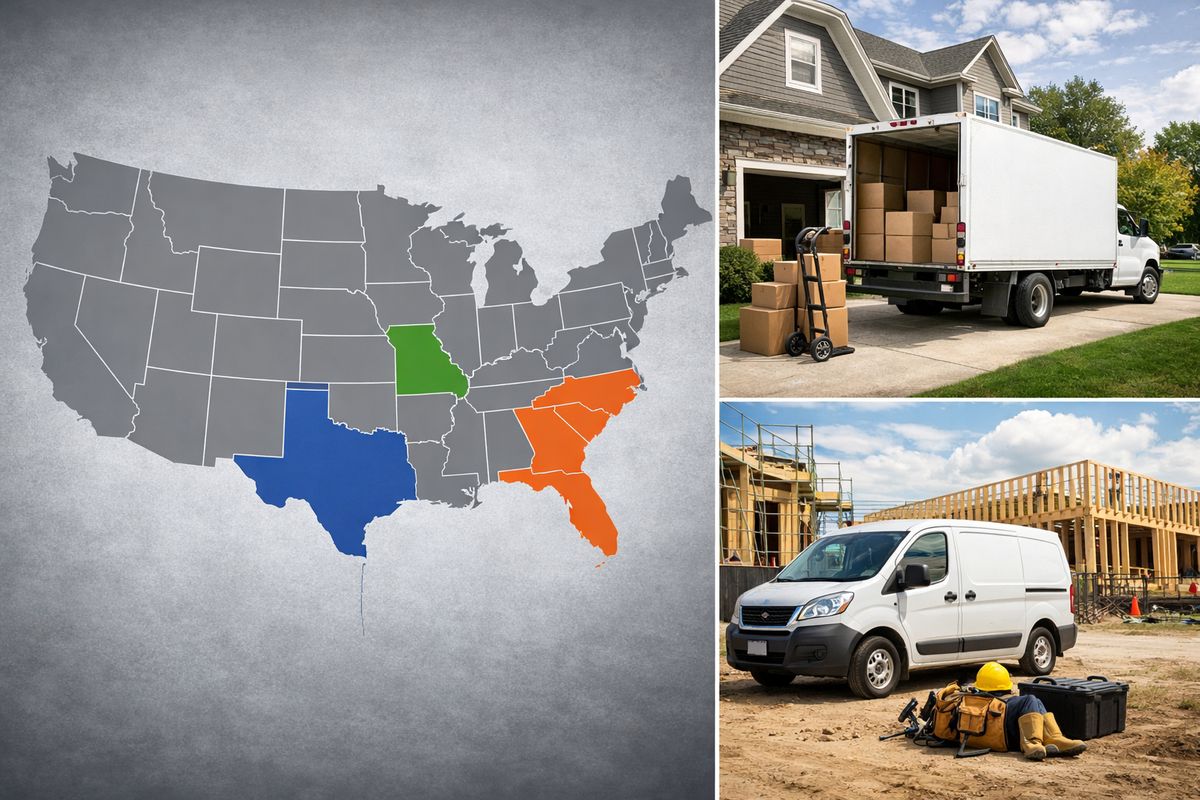
It helps to think of it like driving through state lines with different road signs every few hours. The car is still your car, but speed limits, toll systems, and lane rules change. Insurance works the same way. From Florida to Georgia to Texas, workers’ comp rules, flood exposure, consumer notices, and even available carriers can all change.
The key rules that change from state to state
Most of the confusion gets easier once you group the differences into a few buckets. The big ones are workers’ comp, health benefits, policy filings, and property coverage.
Workers’ compensation rules
This is often the first place trouble shows up. If employees work across state lines, workers’ comp may need certain states specifically listed on the policy, and the policy may need to address “extraterritorial” coverage, which is a plain way of saying temporary work outside the home state.
Employee location matters more than many owners expect. So does payroll by state, class code accuracy, and the kind of work being done. A desk-based employee in one state and a field installer in another are not interchangeable for rating purposes. If growth has changed your footprint, it helps to review whether your coverage has kept up with the business you have now.
There is another catch. A few states use monopolistic workers’ comp funds, which means private carriers may not write the workers’ comp policy there in the usual way. That is exactly the kind of detail that makes “one policy covers everything” a risky assumption. If this area is fuzzy, a focused guide on covering a growing team across job types and states can help fill in the gaps.
Employer health coverage and employee benefits rules
Health benefits get messy when employees live in different states because provider networks are often local or regional. A group plan that works well in one state may feel almost useless in another if the doctors and hospitals are out of network.
That is why some smaller employers look at reimbursement-based options instead of forcing one group plan on everyone. In one multi-state case, a California company using a QSEHRA reported saving $67,000 compared with traditional group coverage. The larger point is simple: benefits have to work where your employees actually live, not just where your business is based.
Business licensing, policy forms, and state filings
Insurance compliance follows business activity. If your entity is registered in a state, if you have local employees, or if a policy line requires state-specific paperwork, that paperwork matters. Some states require certain notices, endorsements, or filing language that another state does not.
This is why good recordkeeping matters almost as much as the policy itself. If someone asks for proof, you want to pull it in minutes, not spend all afternoon hunting through email.
Home, flood, and property coverage across state lines
If you own homes, rentals, or vacation properties in more than one state, the location drives the rules. Coastal exposure, windstorm deductibles, wildfire risk, freeze claims, and flood zone designations can all affect the policy structure.
A home in inland Georgia and a waterfront property in Florida are simply not underwritten the same way. Flood coverage is especially state and property specific, so it helps to understand your options for home coverage and flood protection before you assume one setup fits both properties.
How insurers decide which states need to be listed
Insurers usually start with three questions: where do people work, where is the property, and what counts as doing business in that state?
Where your employees actually work
Your headquarters address is not the whole story. A remote employee working from another state, a traveling sales rep, a subcontractor on a temporary job site, or a manager splitting time between locations can all affect how a policy should be written.
That is why remote work deserves a second look every renewal. A single unnoticed move can create a mismatch between payroll, workers’ comp, and benefits eligibility.
Where your property and risk are located
Physical location still drives a lot of insurance decisions. Homes, offices, rentals, warehouses, and vacation properties are rated based on the hazards attached to that place. Hurricane risk in Tampa, flood exposure near the coast, wildfire zones out West, or a hard freeze area farther north all change the conversation.
If you add property and do not update the policy setup quickly, problems show up fast. This is one reason reviewing coverage right after expansion or a new purchase is smarter than waiting for renewal.
Why “doing business” can trigger insurance obligations
You do not need a full office to trigger state obligations. Hiring one employee, buying a property, registering an entity, signing local contracts, or actively serving customers in a state can be enough.
That matters because insurance usually follows the real-world footprint of your operation, not the simplified version sitting in your head.
Common mistakes that cause coverage gaps
Most multi-state insurance problems are not dramatic. They are small misses that stack up.
Assuming one policy automatically covers every state
Some policies do include broad territory language, but that does not erase state-specific requirements. Broad territory wording is not the same as proper workers’ comp state listings, correct property schedules, or required endorsements.
Forgetting remote workers and subcontractors
This happens constantly. Someone moves, a contractor starts without current proof of coverage, or a short-term job site turns into a six-month operation. If contracts shift liability back to you, that oversight can get expensive. For businesses with drivers or service crews, keeping vehicle-related exposure in view as operations spread matters too.
Missing renewals, endorsements, or documentation
Honestly, this is where a lot of avoidable pain starts. Expired certificates, outdated payroll records, old property schedules, or missing documentation can create claim delays and audit trouble. In heavily regulated multi-state operations, poor records can get very expensive. Some sectors have seen audit recoupments exceed $250,000 per provider.
A simple multi-state insurance checklist
A good checklist keeps this manageable.
Review every state where you have people, property, or active work
List every state tied to employees, homes, rentals, offices, vehicles, and active projects. Not just your headquarters. Not just where the mail goes.
Match each state to the right coverage and endorsements
Confirm workers’ comp state listings, property locations, flood and wind needs, liability endorsements, vehicle garaging, and required notices or filings. If limits were set years ago, check whether your current protection is still enough for today’s exposure.
Keep records ready for audits, claims, and renewals
“Audit-ready” just means you can prove what you have, where it is, and who is covered without scrambling. Keep payroll records, certificates, property details, elevation certificates when needed, and renewal dates in one place.
Recheck your setup after every move, hire, or purchase
Expansion is when coverage breaks. A remote hire, a Florida move, a second home purchase, or a new rental conversion should trigger a quick review right away, not months later.
Frequently asked questions
Can one insurance policy cover multiple states?
Sometimes, yes, but not always in the way you expect. A policy may have broad coverage territory, but state-specific compliance, listings, and endorsements can still be required.
Do remote employees count if your business has no office in that state?
Yes, often. Remote employees can affect workers’ comp, payroll reporting, benefits, and other compliance obligations even if you never open a physical office there.
If you own homes in different states, do you need separate policies?
Very often, yes. Separate policies are common because underwriting, flood exposure, wind rules, and carrier availability vary by location.
What is the first thing to check before expanding into another state?
Start by identifying the new risk. Is it people, property, vehicles, or projects? Once that is clear, confirm the insurance rules tied to that specific state before the change goes live.
What changes once you understand multi-state insurance correctly?
You stop treating insurance like a single purchase and start treating it like an up-to-date map. Try one simple move: make a list of every state connected to your people or property, then check whether your current policies actually reflect that list.