
If the phrase outgrown business insurance sounds dramatic, it usually is not. It simply means your policy no longer fits the business you actually run today, and that can happen quietly after a busy year, a new contract, a second location, or even a switch to more online payments.
What it means to outgrow your business insurance
Outgrown business insurance means your coverage was built for an older version of your business. Maybe it fit when you had one location, two employees, basic equipment, and a simple service list. But businesses change faster than policies do.
Here’s the thing: this is common. You do not need a fire, lawsuit, hurricane, or major loss to discover the mismatch. A business can outgrow insurance after adding services, taking on bigger clients, storing customer information, buying more tools, or signing contracts with tougher requirements. The policy itself may still be active, paid, and perfectly legal. It just may not match your current risks anymore.
That mismatch can show up in a few ways. Sometimes your limits are too low. Sometimes you need a type of coverage you never needed before. Sometimes the issue is buried in exclusions, endorsements, or deductibles that made sense a year ago but not now. That is why “outgrown” is the right word. The business evolved. The policy did not.
Why a policy that fit last year can fall behind fast
Business insurance is not a set-it-and-forget-it purchase. It is more like buying shoes for a growing kid. They may still technically go on, but that does not mean they fit.
Policies are built around a snapshot in time: revenue, payroll, number of employees, type of work, locations, equipment, vehicles, and loss history. Once that snapshot gets old, the policy can fall behind. That matters because business insurance exists to protect you from losses in normal operations, and when operations change, the protection often needs to change too, as noted by business insurance use.
Insurance is based on what your business looked like when you bought it
When you first bought the policy, you likely answered a lot of questions. What kind of work do you do? How many people do you employ? How much do you make? Do you own vehicles? Do you store inventory? Do clients visit your location?
Those details shape everything from classifications to endorsements to pricing. If you applied as a small office-based operation, but now install products onsite, deliver goods, or manage more property, your old setup may not tell the full story anymore. Even a business owner’s policy, which looks nicely bundled on paper, can leave gaps as operations expand. That is why it helps to understand when growth should trigger a review.
Growth changes risk in ways that are easy to miss
Some changes feel small because they happen gradually. One employee becomes four. One van becomes three. A side service becomes a major revenue stream. The business still feels “basically the same,” but your exposure is not the same at all.
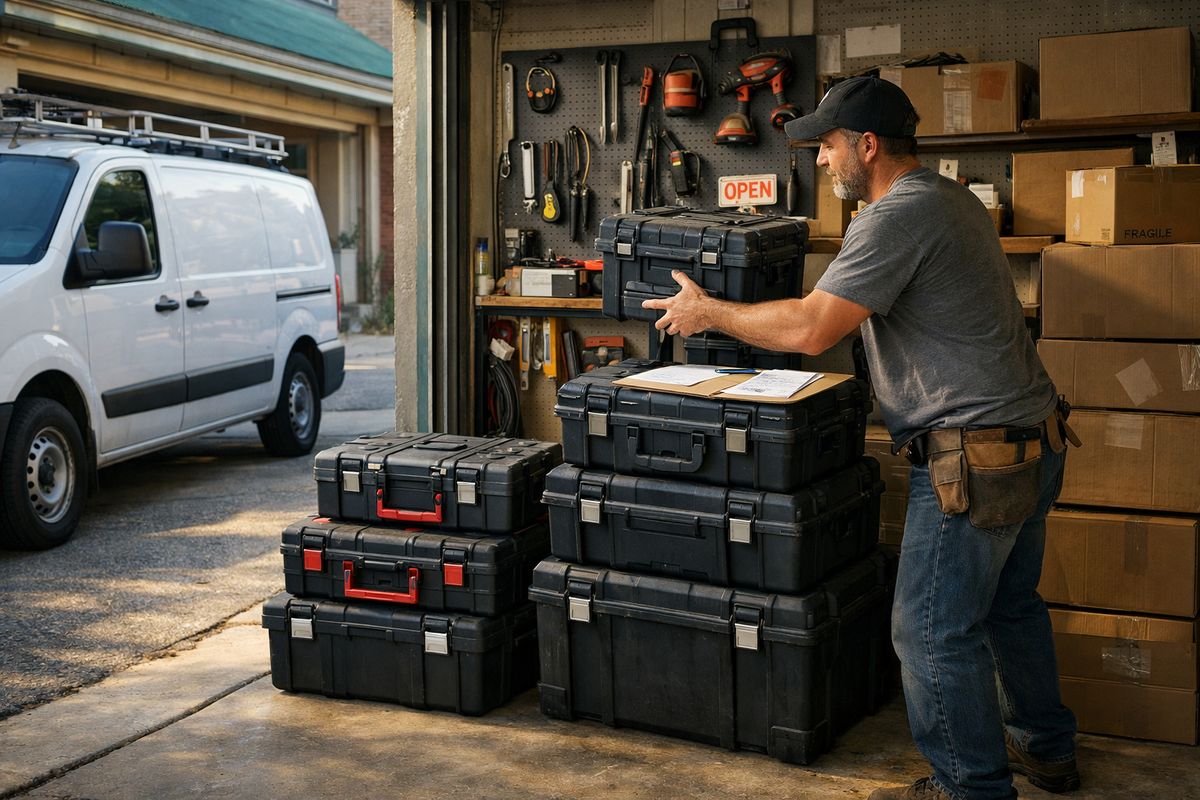
Picture a repair company that started with one van and a handful of local jobs. A year later, it has three vans, more expensive tools, and crews driving across two counties every day. That is not a minor update. That is a different risk profile. More drivers mean more accident exposure. More tools mean more property to replace. More jobs mean more chances for something to go wrong. Quiet growth creates loud gaps.
The clearest signs You’ve outgrown your coverage
Most businesses do not realize they have a coverage problem until something forces the issue. A claim does it. A lender does it. A new client contract does it. But the warning signs usually show up earlier.
Your revenue, payroll, or headcount has jumped
Higher revenue usually means more jobs, more customer interactions, and more at stake if something goes wrong. Payroll and headcount matter too. More employees can affect workers’ compensation, liability exposure, and employee-related claims.
Even if your business is still small by your standards, the scale of a possible loss may be very different than it was before. A slip-and-fall claim, an injury, or an employment dispute does not stay small just because your company does. If staffing has changed, it is worth reviewing what protection growing teams often need and where your current policy may stop short.
You’ve Added equipment, inventory, vehicles, or a new location
This is one of the most obvious signs, yet it gets missed all the time. If you bought new equipment, stocked more inventory, leased a warehouse, opened an office, or added vehicles, your old property values may be outdated.
And it is not only about the purchase price. It is about replacement cost, downtime, transportation, and where the property sits. Tools that move from jobsite to jobsite may need inland marine coverage. A second location may need its own review for local risks. Vehicles used for business usually need more than a personal auto policy, especially when usage expands. If that shift sounds familiar, review how coverage changes once business driving becomes part of operations.
Your services, products, or business model have changed
A business that used to consult may now install. A shop that used to sell in person may now sell online. A contractor that once handled labor only may now source and store materials. Those changes matter because insurance follows operations, not your business card.
The catch is that new revenue streams often bring new categories of risk. Professional advice can trigger professional liability concerns. Physical installation can increase bodily injury or property damage exposure. Online sales can add product liability, shipping issues, and customer data concerns. A policy written for your old model may not stretch far enough.
You’re Signing larger contracts with stricter insurance requirements
This one can expose a problem overnight. A bigger client, landlord, vendor, or lender may require higher limits, additional insured status, waivers of subrogation, or proof of specific coverage before work begins.
Certificates of insurance do not create coverage by magic. They only show what is already in place. So if the contract requires something your policy does not include, you have a real issue, not a paperwork issue. A lot of businesses find out they are underinsured not after a loss, but at the moment somebody asks for documentation.
You rely more on technology, payments, or customer data
Cyber is one of the easiest gaps to miss. If you take card payments, store customer information, depend on cloud software, or run the business through email and online systems, cyber risk is already part of your business.
And this is not only about hackers stealing data. It can be ransomware, fraudulent wire instructions, payment processor issues, or a software outage that shuts you down for two days. Nearly half of U.S. small businesses reportedly carry no cyber insurance at all, which is a huge gap for companies that now live on screens, logins, and cloud tools.
The coverage gaps that usually show up first
Outgrowing insurance is not always about buying “more” insurance. Sometimes it is about buying the right structure instead of assuming the old structure still works.
Limits that no longer match the size of a loss
An insurance limit is the maximum your policy will pay for a covered claim. That sounds simple, but there are a few versions of it. A per-occurrence limit is the most the policy pays for one incident. An aggregate limit is the most it pays during the policy period, usually a year. A per-claim limit works the way it sounds, one claim at a time.
Those numbers can look fine until a real claim happens. If you are doing bigger jobs, holding more inventory, or replacing more expensive equipment than before, old limits can get thin fast. One source gives a simple example: if liability reaches $260,000 and your policy limit is $250,000, the extra amount comes out of your pocket, which is why understanding how low limits create trouble matters before a claim tests them.
Deductibles that save premium but strain cash flow
A deductible is the amount you pay before insurance starts paying on a covered loss. Higher deductibles usually lower your premium. That tradeoff can be smart, but only if the deductible still fits your cash flow.
Maybe a $5,000 deductible looked manageable when you had strong reserves and lower claim exposure. Maybe now you have tighter margins, more vehicles, more weather exposure, or pricier equipment. In that case, the lower premium may not be worth the stress of covering a larger out-of-pocket hit at exactly the wrong time.
Missing coverage for newer risks
This is where businesses often feel surprised. General liability does not cover everything. Property coverage does not cover every kind of interruption. A business owner’s policy is useful, but it is not magical.
Common blind spots include cyber insurance, equipment breakdown, business interruption, hired and non-owned auto, professional liability, employment practices liability, umbrella coverage, and flood. Flood deserves a special mention because many business owners assume water damage is automatically covered when it often is not. If your business owns property, stores equipment onsite, or operates in a storm-prone area, it helps to understand the difference between standard property protection and separate flood insurance coverage. And if mixed-use or home-based operations overlap with your residence, basic home insurance may not respond the way you expect for business-related losses.
Exclusions and endorsements that no longer fit your operations
Sometimes the problem is not what the policy covers. It is what the policy carves out.
Exclusions remove certain losses from coverage. Endorsements add, limit, or modify parts of the policy. If your operations expanded into new states, new service areas, or different property types, old endorsements may no longer make sense. A business that crosses state lines, for example, may run into extra compliance issues and policy complications, especially when rules vary by location. That is where understanding how coverage shifts across state lines becomes more than a technical detail.

Real-world changes that should trigger an insurance review
A lot of business owners wait for renewal. That is better than never, but certain changes should trigger a review right away.
After a move, renovation, expansion, or new property purchase
A new office, warehouse, storefront, or owned building changes your property exposure immediately. So does a renovation that upgrades finishes, wiring, machinery space, or storage capacity.
Even a home-based business that suddenly takes over the garage or adds inventory in a detached structure deserves another look. Property changes can also change weather exposure. If a new location sits in a coastal, wind-prone, or flood-prone area, your risk may look very different on paper than it did at your last address.
After hiring, outsourcing, or changing who does the work
Insurance follows the actual work and the people doing it. Employees, subcontractors, seasonal staff, leased workers, and outside vendors do not create the same exposure.
If you outsource work you used to do yourself, liability can shift in messy ways. If you hire more in-house staff, payroll and workers’ compensation concerns rise. If subcontractors are handling more of your operations, contract language and certificate tracking matter a lot more than before. The business may feel more flexible, but the insurance picture usually gets more complicated.
After buying expensive tools, machinery, or vehicles
A new trailer, lift, camera package, HVAC machine, or work truck should always raise the question: is it covered where it is stored, while it is moving, and while it is in use?
That last part gets overlooked. A machine that breaks can cost more than the machine itself because downtime costs money too. If a delivery vehicle is off the road for a week, the ripple effect hits jobs, scheduling, revenue, and customer experience.
After taking card payments, storing customer info, or depending on cloud software
Digital growth counts as business growth. You do not need a fancy app or a tech startup label for cyber exposure to matter.
If your scheduling system, billing software, email, or cloud files go down, work can stop cold. In some ransomware cases, recovery costs reach six figures. That is not an IT inconvenience. That is a business continuity problem.
How to check whether your current policy still fits
A policy review does not have to start with jargon. It starts with comparing your paperwork to reality.
Compare your policy to the last 12 to 18 months of business changes
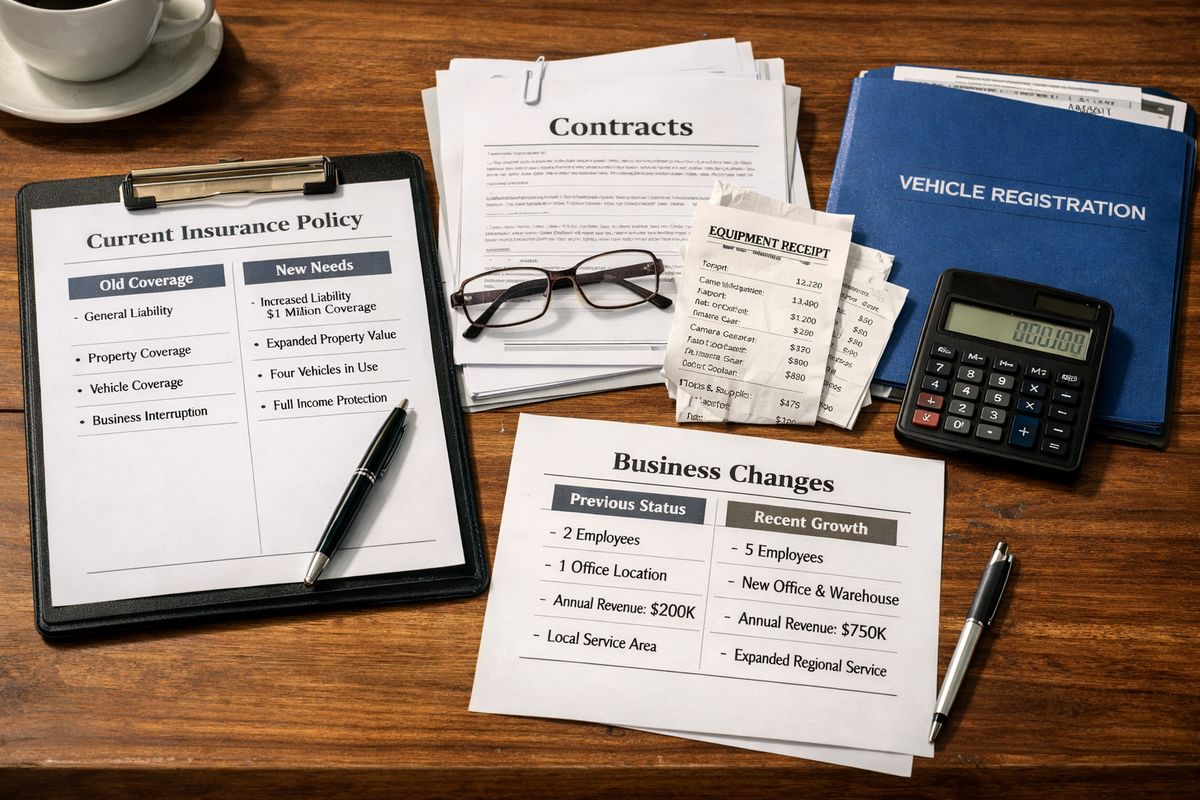
Pull together the practical stuff: revenue growth, payroll changes, staff count, new services, new equipment, new vehicles, new software, and new locations. Think of it like updating a map. If the map still shows the old roads, it will not help much when you actually need directions.
This is also a good moment to include changes that do not feel dramatic. One larger client. One additional van. One crew that now travels farther. Those small shifts often explain why a once-reasonable policy now feels thin.
Review your contracts before you review your premium
Price matters, but it is not the first thing to check. Contracts often drive coverage decisions more than budget does.
Look at agreements with clients, landlords, lenders, vendors, and property managers. Check insurance requirements, required limits, additional insured wording, and any waiver language. If the contract demands something your current policy does not include, the policy is not truly “good enough,” even if the premium looks attractive.
Check values, limits, and downtime exposure
Review building values, business personal property, inventory, tools, equipment, and vehicles. Then ask a harder question: what happens if operations stop for a week, or a month?
That downtime piece matters more than most owners expect. Lost income, rent, payroll obligations, and delayed projects can create more pressure than the damaged property itself. Insurance should reflect not only what you own, but what it costs when you cannot use it.
Look closely at what is excluded
This part is boring. It is also where the truth lives.
Look for exclusions, sublimits, and endorsements written in plain but very specific language. Water damage limits, cyber exclusions, employee dishonesty rules, equipment limitations, location restrictions, and professional services carve-outs can completely change how a claim plays out. The goal is simple: find out what your policy does not do before a loss finds out for you.
Common misunderstandings about “enough” business insurance
A lot of confusion comes from reasonable assumptions that just are not true anymore.
“My business is still small, so my old policy is probably fine”
Small does not mean low-risk. Risk comes from operations, contracts, vehicles, property, staff, and data, not just revenue.
A small company can still sign a contract with strict insurance requirements. A small office can still get hit by ransomware. A small contractor can still cause a large property damage claim. Size matters, but it is not the whole story.
“I already have general liability, so I’m covered”
General liability is valuable, but it covers a specific lane. It usually helps with bodily injury, property damage, and some advertising injury claims. That is not the same thing as full protection.
It typically does not replace cyber, flood, professional liability, workers’ compensation, commercial auto, or property insurance. If your business has grown in multiple directions, a single familiar policy may now cover only part of the picture.
“Higher premiums always mean I’m overinsured”
Not necessarily. Premiums rise for a lot of reasons: claims trends, construction costs, legal costs, storm risk, location changes, market cycles, and updated underwriting.
The U.S. business insurance market keeps growing, which reflects ongoing demand and changing risk, not a world where every price increase means wasted coverage. Sometimes a higher premium means you are finally insuring the business you actually have.
What to bring to an insurance review
A useful review goes faster when you show up with real numbers instead of rough guesses.
Key numbers and documents to have ready
Bring revenue figures, payroll totals, employee count, business addresses, equipment lists, vehicle schedules, recent contracts, certificates of insurance, and loss history. If you bought property, added vehicles, or upgraded machinery in the past year, include those details too.
For digital exposure, include payment methods, software systems you depend on, and any outside IT or security providers you use. Cyber underwriting is getting more proof-driven, and stronger controls can affect pricing and terms.
Questions worth asking during the review
Ask simple, direct questions. What changed in your risk? Where are your biggest gaps? Do your limits still fit your current jobs, property, and contracts? What coverage do your agreements require? What would not be covered today?
Those questions cut through a lot of noise. Insurance reviews go off track when the conversation stays too general. Specific questions get useful answers.
How often you should revisit your coverage
The best review schedule is boring and consistent, with a few exceptions for big changes.
At least once a year
An annual review is the baseline. Renewal season is usually the easiest time to update classifications, values, limits, and endorsements before the next policy term starts.
This is also a good time to revisit your deductibles and compare last year’s assumptions to current reality. A policy that felt right 12 months ago may already be behind.
Anytime your business changes in a meaningful way
Do not wait for renewal if you added a location, hired more staff, bought vehicles, expanded services, changed vendors, took on larger clients, or started leaning harder on software and stored data.
A meaningful business change is enough reason. That simple.
If you suspect You’ve outgrown your policy, start here
Pull out your current policy and compare it to the biggest changes from the past year. Not every change will require new coverage, but every meaningful change deserves a quick check.
That one hour of review can save a painful surprise later. Try that first: line up your policy, your current contracts, and your biggest changes since last renewal. If those three no longer match, your business has probably outgrown its insurance.
Frequently asked questions
How do you know if you’ve outgrown business insurance?
You have likely outgrown it if your business changed in ways your policy does not reflect, such as higher revenue, more employees, added vehicles, a new location, larger contracts, or heavier reliance on technology and customer data.
Is outgrown business insurance only about needing higher limits?
No. Bigger limits are only one part of it. You may also need different policy types, new endorsements, updated classifications, or lower deductibles that better match your current cash flow and exposure.
Can a small business still have major coverage gaps?
Yes. Small businesses can still face expensive lawsuits, property losses, cyber incidents, contract problems, and employee claims. A business does not need to be large to have a large claim.
Does a business owner’s policy cover everything as you grow?
Usually not. A business owner’s policy can be a solid foundation, but growth often creates gaps in areas like cyber, professional liability, commercial auto, equipment breakdown, flood, or employment-related claims.
When should you review business insurance outside of renewal?
Review it after major changes such as hiring, expanding services, signing larger contracts, moving locations, buying vehicles or equipment, storing more inventory, or changing how you handle payments and customer information.
What is the quickest first step if you think coverage is outdated?
Compare your current policy to the last 12 to 18 months of business changes. If your policy describes an older version of your business, that is the clearest sign it is time for a review.