
Commercial auto insurance usually becomes urgent right after your business grows just enough to get complicated. One extra van, one new employee, one longer delivery route, and suddenly the coverage that felt fine last year can leave a very real hole. This guide breaks down what commercial auto insurance actually does, what growing businesses tend to miss, and how to buy coverage that keeps up with the way you really operate.
What commercial auto insurance really does for a growing business
Commercial auto insurance protects vehicles used for business and, just as important, the liability that comes with business driving. That means it can help pay for damage your driver causes to someone else’s car, injuries from an accident, and damage to your own insured vehicle, depending on the coverage you choose. In plain English, it is the policy built for business use, not personal errands with a logo on the door.
For a growing business, that matters because auto risk grows faster than most owners expect. A vehicle is not just transportation. It is a moving worksite, a rolling billboard, a delivery tool, and sometimes a place where tools, materials, or products sit between stops. When that vehicle is involved in a claim, the cost is not only the repair bill. It can be lost jobs, missed appointments, upset clients, and cash flow pressure.
That is why commercial auto insurance is not just a box to check. Done right, it supports growth by making it easier to add drivers, expand territory, finance newer vehicles, and keep contracts that require proof of coverage.
Personal auto vs. commercial auto: the line that trips people up
The confusion usually starts with one simple thought: “It’s just a car.” But insurers care less about what the vehicle is and more about how it is used.
If you use a car or truck occasionally to stop by a client’s office, carry samples, deliver products, haul tools, or move between job sites, that use can cross into business exposure. A personal auto policy may allow some limited business use, but regular work-related driving often falls outside what it was designed to cover. The catch is that many owners do not find out where the line is until a claim gets reviewed.
A good rule is blunt but useful: once business driving becomes routine, personal coverage is usually the wrong tool.
Why growth changes your risk fast
Growth multiplies exposure in quiet ways. More vehicles mean more time on the road. More employees mean more driving habits to manage. More service area means more miles, more intersections, more parking lots, and more chances for something to go wrong.
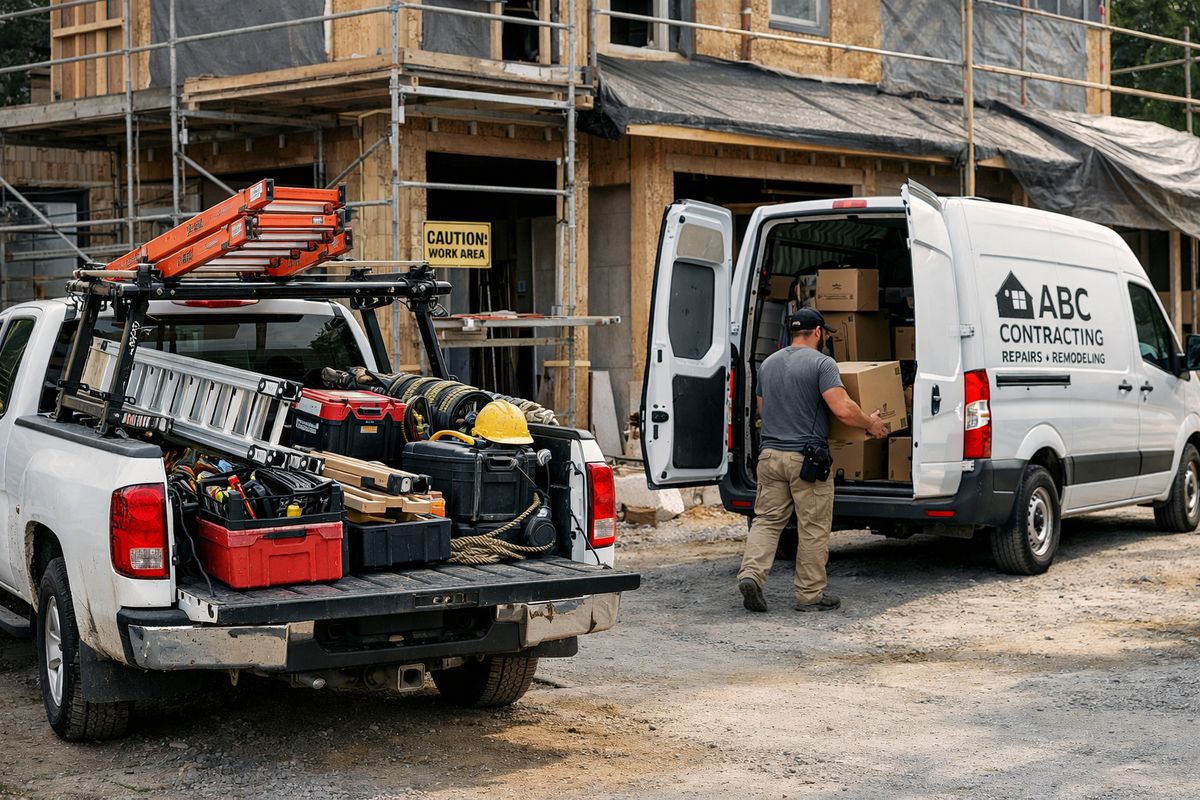
Picture a small contractor in Tampa that starts with one pickup and one owner-driver. Six months later, there are three trucks running across two counties, one trailer in the mix, and employees moving between morning estimates and afternoon job sites. That business did not become reckless. It just became busier. And busier changes the insurance conversation fast.
Who usually needs commercial auto insurance
A lot of businesses assume this coverage is only for fleets or trucking companies. It is much broader than that.
Businesses with company-owned vehicles
If your business owns, leases, or finances cars, vans, pickups, or box trucks used for work, commercial auto insurance is usually part of the basic setup. That includes contractors, electricians, plumbers, landscapers, cleaning companies, real estate teams, mobile service businesses, and delivery operations.
Vehicle size matters, but use matters more. A single pickup loaded with ladders and moving from site to site creates a different exposure than a family SUV used only on weekends.
Businesses that use employee-owned or personally owned vehicles
Here’s where people get surprised. Your business can still have auto-related liability even when the vehicle itself is not titled to the business.
If an employee uses a personal car for bank runs, client visits, or local deliveries, your business may need hired and non-owned auto coverage. That mouthful simply means protection for liability tied to vehicles your business uses but does not own. It does not replace the driver’s personal policy. It fills a separate business gap.
This is often worth reviewing at the same time as coverage for employee-related risk, because growth tends to create both driving exposure and broader staff-related liability at once.
When a single vehicle is enough to trigger the need
You do not need a fleet. One work van can be enough. One pickup with your tools in back can be enough. One owner driving to estimates every day can be enough.
Small businesses tend to wait too long because “small” feels low risk. Honestly, that is backwards. A single uncovered claim can hit a smaller business harder because there is less margin for error.
What commercial auto insurance typically covers
Most policies are built from a few core coverage parts. Once you understand those parts, quotes get much easier to compare.
Liability coverage
Liability is the foundation. It helps pay when your driver causes bodily injury to another person or damages someone else’s property. If your van rear-ends another car and the other driver ends up with medical bills and a damaged bumper, liability coverage is the part that responds.
State minimum limits exist, but growing businesses often need more than the legal minimum. Medical costs climb fast. So do repair bills. If your business is getting larger, it is smart to think about when coverage limits stop being enough, not just what satisfies the bare requirement.
Physical damage coverage
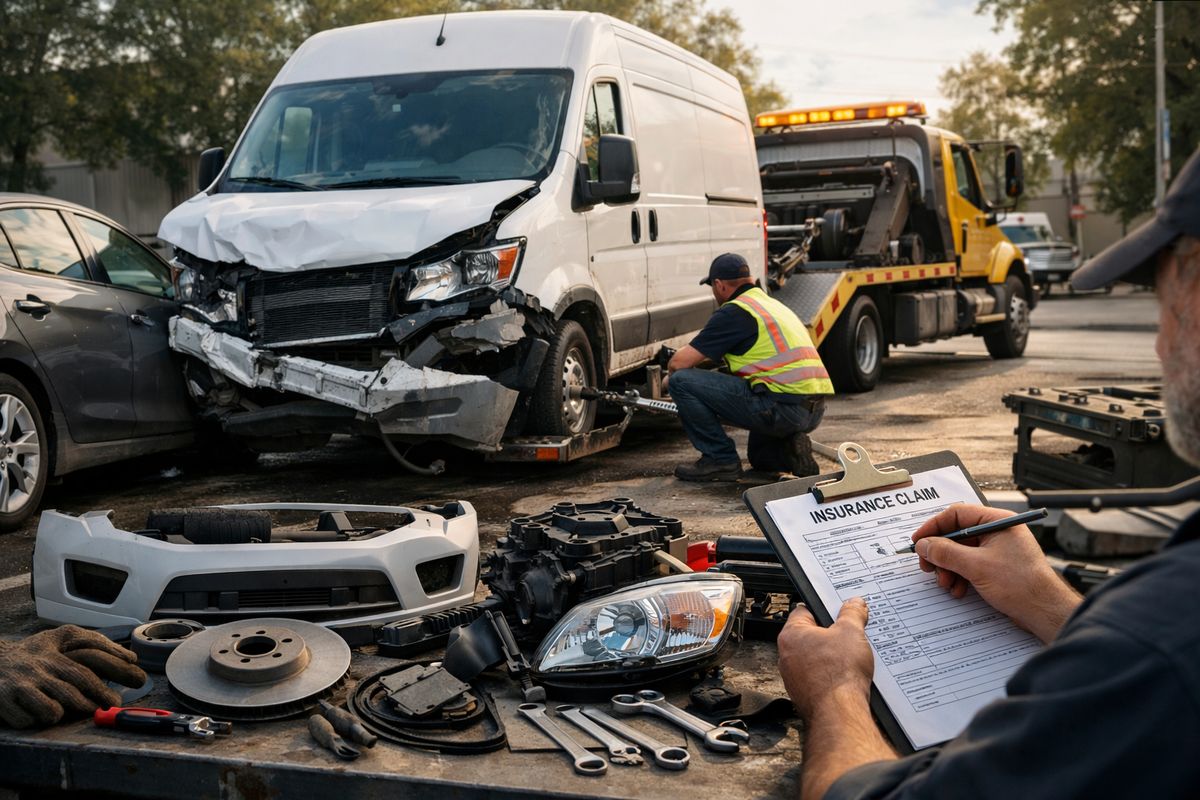
Physical damage covers your insured vehicle itself. Collision generally applies when your vehicle hits another car or object. Comprehensive generally applies to things like theft, vandalism, hail, falling tree limbs, or fire.
This is the part that protects the truck, van, or car you rely on to make money. If you lease or finance vehicles, lenders often require it anyway.
Medical payments and uninsured/underinsured motorist coverage
Medical payments coverage can help with medical costs after an accident, regardless of fault, up to the policy limit. Uninsured and underinsured motorist coverage can help when the other driver has no insurance or not enough of it.
That second one matters more than many owners realize. Plenty of drivers on the road carry weak limits. If one of them hits your vehicle, you do not want your business stuck waiting on somebody else’s bad insurance decision.
Optional add-ons that can matter more than you think
A few extras can make a bigger difference than flashy marketing features. Towing, roadside service, rental reimbursement, and gap coverage can help keep work moving after a loss. If a vehicle going down for five days would throw your schedule into chaos, these options deserve a close look.
Coverage gaps growing businesses miss
This is where expensive surprises usually live.
Tools, equipment, and cargo inside the vehicle
Commercial auto insurance often covers the vehicle, not everything inside it. Tools, equipment, inventory, or customer goods in transit may need separate protection, such as inland marine, cargo, or business property coverage.
That matters for contractors, delivery businesses, and service companies in a big way. Replacing a stolen van is one problem. Replacing $8,000 worth of tools inside it is a different problem entirely.
Employee driving, permissive use, and excluded drivers
Not every person who grabs the keys is automatically covered in the way you expect. Policies can depend on listed drivers, approved use, and underwriting details tied to driver history.
If your driver schedule has changed and the policy has not, that is a red flag. A growing business should review this regularly, especially if the account already feels patched together. If that sounds familiar, it may be a sign you have outgrown the policy structure you started with.
Personal use, rideshare, and delivery-for-fee situations
Some work vehicles get used for personal errands. Some personal vehicles get used for paid deliveries. Some businesses mix both without thinking much about it.
The catch is that delivery-for-fee, app-based driving, courier work, and rideshare exposure often need special treatment. A policy that fits a plumber may not fit a courier. A work truck used to pick up groceries on the weekend may be fine under some forms and a problem under others. This is one of those details that seems tiny until it really, really isn’t.
How to choose the right policy for your business stage
Buying well starts with matching the policy to real operations, not the version of the business that existed a year ago.
Start with how your vehicles are really used
Be specific about radius of travel, what gets hauled, where vehicles are parked, and who drives them. Local service calls, cross-county deliveries, job site visits, and interstate travel are not the same exposure.
If your business has expanded into new states, auto coverage is only one piece of the puzzle. It helps to understand how insurance changes across state lines, because registration rules, liability expectations, and filings can shift with geography.
Match limits and deductibles to your risk tolerance
Your limit is the maximum the policy pays for a covered loss. Your deductible is the amount you pay out of pocket before certain coverages kick in.
Higher liability limits usually make sense once your business has more to lose, more drivers, or contracts that require stronger proof of insurance. Higher deductibles can lower premium, but only if your cash flow can absorb a hit without ruining the month. Saving money on paper is not helpful if a claim leaves you scrambling to cover the deductible.
Think beyond today’s fleet size
Buy for the next year, not just this week. If you expect to add a driver, replace two older vans, or move into busier territory, mention that while shopping. Carriers prefer fewer surprises, and your policy should not need constant bandages every time the business levels up.
What affects the cost of commercial auto insurance
Price matters, and lately it has been getting harder to ignore.
Vehicle type, weight, and repair costs
A compact car used for local appointments does not price like a heavy pickup pulling a trailer. Box trucks, specialty vehicles, and higher-value units usually cost more to insure because the repair and claim potential is different.
Repairs are also more expensive than they used to be. Sensors, cameras, calibration, labor shortages, and parts delays all push claim costs higher. Even simple damage can turn into a longer, pricier repair than it would have five years ago.
Driver history, claims history, and years in business
Tickets, accidents, and prior claims affect pricing because they say something about future risk. So does operating history. A business with clean losses over several years usually looks more stable to underwriters than a new operation with thin documentation.
That does not mean new businesses are uninsurable. It means details matter more. Accurate driver lists, clean motor vehicle records, and a clear story about operations can make a real difference.
Location, routes, and industry class
Where you drive matters. So does what kind of work you do while driving. Dense traffic, theft-prone areas, storm exposure, and frequent-stop delivery all change the rate picture.
A florist making local drops, for example, presents a different pattern than a contractor hauling materials or a courier racing a tight route all day. The insurer is pricing the movement, not just the machine.
Why rates have been climbing across the market
Commercial auto has been one of the toughest insurance lines for carriers, and that pressure flows straight into quotes. Recent industry reporting shows this line is still running above a 100 combined ratio, which means claims and expenses are still outpacing premium. Add litigation pressure, severe losses, and repair inflation, and you get a market that stays tight even when other lines begin to soften.
Ways to keep premiums from getting out of hand
You cannot control the market. You can control how your business looks to it.
Build a stronger safety story
Underwriters like proof. Driver screening, MVR checks, written vehicle-use rules, maintenance logs, and accident reporting procedures all help show that your business is managed, not improvised.
This matters even more at renewal. Carriers have grown pickier, and stronger documentation can help you avoid bad surprises when reviewing your insurance after a growth spurt.
Use telematics and driver monitoring if the fit is right
Telematics is just driving data collected through GPS or onboard technology. It can track speed, braking, routes, idle time, and other habits.
Used well, it is a coaching tool. And that is the point. It is not enough to collect data and ignore it. Industry research shows 80% of fleet professionals now use fleet technology to manage vehicles and improve safety, largely because the data helps reduce preventable loss and supports stronger underwriting.
Review limits, deductibles, and bundled policies carefully
There are smart ways to cut cost without cutting the policy to pieces. Removing vehicles no longer in service, increasing deductibles where cash reserves allow, and coordinating coverage with general liability or an umbrella policy can all help.
This is also where a broader insurance checkup helps. If your business has drivers on payroll, job site exposure, or field staff, auto should fit with the rest of your protection, including what growing employers usually carry for workplace injury claims.
Common buying mistakes to avoid
Some mistakes are annoyances. These ones get expensive.
Insuring the vehicle but not the operation
A lot of owners focus on the truck and forget the business activity around it. Who drives it, what is inside it, whether personal vehicles are used for work, and whether liability limits are high enough often matter more than the paint color and VIN.
Commercial auto should match the operation, not just the asset.
Waiting until renewal week to fix the account
This is a mistake. Full stop.
In a tighter market, messy late renewals get punished. Some carriers are raising rates, tightening rules, or pulling back in harder segments. Market reports show tight underwriting is still a real issue in commercial auto, especially where claim severity and driver quality concerns are high. Review vehicles, drivers, and operations well before renewal so you have time to fix errors and present a cleaner account.
Choosing the cheapest quote without checking the fine print
A cheap quote can hide weak liability limits, driver exclusions, missing hired and non-owned coverage, or restrictions on delivery and specialty use. It can look fine right up until a claim.
Think of it like buying a lock that only works when the weather is nice. Technically, yes, you bought a lock. But that was not really the job.
Commercial auto insurance by business type and use case
The right setup depends heavily on how your business uses vehicles day to day.
Contractors and home service businesses
Pickups, vans, trailers, and crews moving between job sites create a mix of driving risk and equipment exposure. If tools or materials ride in the vehicle, make sure that property is addressed separately instead of assuming the auto policy handles it.
Delivery, courier, and last-mile businesses
This segment is growing fast because online buying keeps pushing more goods onto local roads. In fact, light commercial vehicles are one of the fastest-growing segments in commercial auto, driven by e-commerce and urban delivery demand. More stops, tighter timing, and higher mileage usually mean more pricing pressure, so these businesses benefit from more frequent policy reviews.
Real estate, sales, and professional service businesses
If you mainly use cars for client visits, showings, or local appointments, your risk profile may be lighter than delivery or trade work, but it is not zero. Hired and non-owned auto coverage can be especially useful when staff uses personal vehicles for business errands.
Businesses building a small fleet
Going from one or two vehicles to four or five is a real transition point. That is when informal habits start to break down. Centralized driver rules, scheduled record reviews, telematics, and possibly umbrella coverage start making more sense. The business does not need to be huge before fleet-style discipline starts paying off.
What to have ready before you request quotes
The easier you make it for an underwriter to understand your operation, the better your quote process usually goes.
Vehicle and driver information
Have VINs, garaging addresses, current mileage estimates, vehicle use details, driver’s license information, and prior loss history ready. A clean vehicle list sounds basic, but it solves a lot.
Business details underwriters will ask about
Expect questions about years in business, where you operate, how far vehicles travel, employee count, delivery or hauling details, and whether vehicles are owned, leased, or financed. If your operation is changing soon, say so now instead of after binding.
A simple next step before you buy
Make one list: every vehicle, every driver, and how each vehicle is actually used.
That one step makes quote comparisons much easier. It also helps catch the stuff that slips through the cracks, like a personal car doing work errands or a retired van still sitting on the schedule. If you are also reviewing broader property risks at the same time, it helps to keep auto separate from personal policies such as home insurance or flood coverage, because those policies solve very different problems.
Frequently asked questions
Does commercial auto insurance cover personal use?
Sometimes, but not always in the way you expect. Some policies allow limited personal use by listed drivers, while others are narrower. If a work vehicle is also used for errands, commuting, or family driving, that should be disclosed clearly before the policy is issued.
Do you need commercial auto insurance for one vehicle?
Yes, one vehicle can be enough. If that vehicle is used regularly for business, especially for job sites, deliveries, hauling tools, or client visits, commercial auto may be the better fit than a personal policy.
Are tools in the truck covered by commercial auto insurance?
Usually not automatically. The vehicle itself may be covered, but tools, equipment, materials, or goods inside often need separate coverage such as inland marine, cargo, or business property insurance.
What is hired and non-owned auto coverage?
It is liability coverage for vehicles your business uses but does not own. That can include rented vehicles or employee-owned cars used for work. It does not replace the driver’s own auto insurance, but it can protect your business if an accident creates liability.
Why is commercial auto insurance so expensive right now?
Claims have become more expensive. Repair costs are up, legal settlements are larger, and carriers have tightened underwriting after years of poor results. That means pricing is based on a tougher market than many owners remember.
How early should you start shopping before renewal?
Start early, not at the last minute. Sixty to 120 days ahead is a smart window for many growing businesses because it gives time to fix driver lists, update vehicle schedules, and improve the account before underwriters review it.