
Business insurance limits are the maximum amount your policy will pay for a covered loss. That sounds simple, but business insurance limits become a real problem when your policy still reflects the version of your business from three renewals ago, not the one you run today.
What business insurance limits actually mean
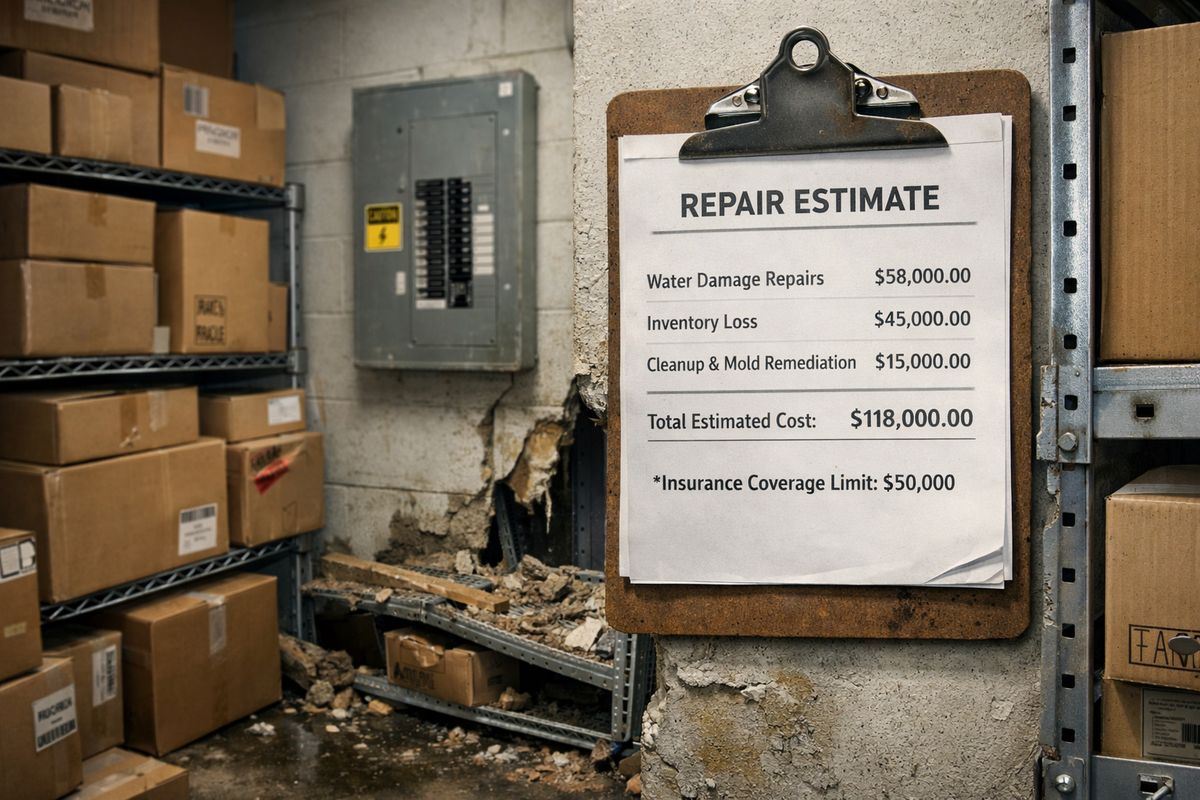
A policy limit is the cap. If a covered claim costs more than that cap, the rest comes out of your pocket.
That is the part many businesses miss. Having insurance and having enough insurance are not the same thing. A policy can absolutely respond to a loss and still leave you with a painful unpaid balance at the end.
Think of it like a credit card with a low limit during an emergency. It works, technically. It just stops working long before the bill does.
Coverage vs. limits vs. exclusions
Coverage answers, “What kinds of losses can this policy respond to?” Limits answer, “How much will it pay?” Exclusions answer, “Where does coverage stop completely?”
Those three get mixed together all the time. If your policy covers water damage in some situations, that does not mean it covers flood. If it includes cyber as a small add-on, that does not mean the amount is large enough for a ransomware event. If professional liability is excluded, no limit helps because there is no coverage to begin with.
Once you separate those ideas, insurance gets a lot easier to read. You stop asking only, “Do I have this coverage?” and start asking the better question: “If something bad happens, how far does this policy actually go?”
Why low limits are a hidden problem
Low limits are quiet underinsurance. Nothing looks obviously broken until a claim happens.
That is why this issue sneaks up on you. Your declarations page still lists liability, property, business income, maybe cyber, maybe umbrella. On paper, it looks fine. But if property values rose, payroll grew, customer traffic increased, or you added more technology, the size of a possible claim probably grew too.
A lot of businesses renew on autopilot. That is exactly how limits drift out of date. An annual policy review is one of the simplest ways to catch that drift before it gets expensive.
How you end up with limits that no longer fit
Most low-limit problems do not come from one bad decision. They come from normal business life.
You buy a policy. It fits well enough. Then you renew it a few times because things are busy and nothing terrible happened last year. Meanwhile, your business changes in a dozen small ways. The policy does not.
Growth changed your risk, but the policy stayed the same
Growth is good. It also changes claim size.
If your revenue increased, you probably handle more transactions, more customers, more inventory, or bigger projects. If you hired more people, your employment exposure changed. If you added services, opened another location, signed larger contracts, or store more customer data, your loss potential likely expanded even if your claim frequency did not.
Here is the thing: insurance limits should match your current operation, not your startup version. Changes like revenue growth, new locations, and added staff are all strong reasons to revisit limits, especially if you are already wondering about the right time to revisit your policy after expansion.
Inflation made old numbers weaker
A $1 million limit still says $1 million on paper. It just does not buy what it used to.
Construction costs went up. Repair costs went up. Legal defense costs went up. Medical bills certainly did not get cheaper. So a property limit that felt comfortable in 2022 may be thin now, and a liability limit that once felt generous may get burned up much faster in a serious claim.
This is especially noticeable with property and business interruption. Replacement cost estimates age badly when labor and materials jump, and downtime gets longer when contractors, permits, and supplies are backed up.
Your operations got more complex
Complexity creates more ways a low limit can fail.
Maybe your staff works remotely across state lines now. Maybe you rely on a third-party cloud platform. Maybe you deliver products in employee-owned vehicles, lease equipment, or depend on one key supplier. Maybe you hold more sensitive customer information than you did two years ago.
Each of those changes can affect how much coverage you need and which policy should carry it. Multi-state hiring, for example, can change workers’ comp and employment exposure quickly, especially if you are sorting through coverage issues that come with operating across state lines.
The warning signs your limits are too low
You do not need a claim to spot a bad fit. Usually, the warning signs show up earlier.
You haven’t reviewed your policy in a year or more
A year is long enough for a business to change in meaningful ways. If you hired, moved, expanded, renovated, bought equipment, added inventory, or changed how you operate, your limits deserve another look.
This does not need to be a day-long project. In many cases, a focused 30-minute review surfaces the biggest problems: flat limits, missing endorsements, outdated property values, or sublimits that are too small to matter.
Your policy limit hasn’t changed, but your business has
Flat limits during a growth period are a red flag.
If payroll rose, sales increased, square footage expanded, contract requirements changed, or customer records multiplied, but your liability, property, BI, or cyber limits stayed exactly the same, your coverage likely shrank in real terms. Not because the policy disappeared, but because your risk outgrew it.
That is when it starts to feel like you may have outgrown the policy you bought years ago, even if the renewal paperwork still looks familiar.
You’re Focused on premium and not claim size
Saving money matters. But cheap coverage gets expensive fast when the limit is wrong.
A lower premium can come from lower limits, thinner endorsements, higher deductibles, or all three. That tradeoff may be fine for a risk you can actually absorb. It is a terrible idea for a serious lawsuit, cyber event, or long shutdown.
In a stable market, the smarter move is not always finding the lowest price. Sometimes it is using stable pricing to improve terms, raise weak sublimits, or fix a coverage gap before it turns into a five-figure problem.
The business insurance limits most often set too low
Some limits are underpriced in people’s heads because the loss feels abstract, until it is not.
General liability limits
General liability covers bodily injury, property damage, and certain personal or advertising injury claims. It matters if customers visit your location, if you work on job sites, if you sell products, or if contracts require minimum limits.
A common setup is $1 million per occurrence and $2 million aggregate. For some businesses, that is still workable. For others, especially with public foot traffic or product exposure, it is not much cushion at all. Modern claims can run past standard primary limits faster than many owners expect.
Commercial property limits
Property limits apply to your building if you own it, plus business personal property like furniture, equipment, inventory, and improvements you made as a tenant.
This is where underinsurance hurts even before a total loss. A partial fire, roof failure, or major water loss can expose weak building values, outdated inventory estimates, missing tenant improvement amounts, or equipment that costs far more to replace than your schedule shows.
If your business operates in a storm-prone area, this matters even more. Property losses often overlap with other coverage questions too, especially if you are also thinking about home coverage or flood protection for mixed-use or owner-occupied properties with separate personal exposures.
Business interruption limits
Business interruption coverage replaces lost income after a covered property loss shuts you down. For a lot of businesses, this is where the biggest financial pain lives.
Physical damage is one bill. Lost revenue, ongoing payroll, rent, loan payments, and delayed reopening are another. Recovery also tends to take longer than expected. Permits drag out. Equipment takes months to arrive. Contractors are booked. Customers do not all come back on day one.
A 12-month BI limit can look fine until the repair finishes in month nine and your policy only gives you 30, 60, or 90 extra days to rebuild sales. That is the catch. Reopening is not the same as recovering.
Cyber liability limits
Cyber is one of the most overlooked limit problems right now.
A lot of package policies and BOPs include a tiny cyber endorsement. That sounds reassuring until you price out forensic work, legal review, notification, credit monitoring, system restoration, lost income, and possible extortion demands. A small cyber sublimit can disappear in days. In many cases, embedded cyber coverage is capped far below real ransomware losses.
If you depend on email, cloud software, online payments, customer data, or remote access, cyber is not optional background noise anymore.
Employment practices liability limits
EPLI covers claims tied to hiring, firing, harassment, discrimination, retaliation, and similar workplace issues.
Even when a claim does not end in a judgment against you, defense costs can pile up fast. Attorney fees, document production, interviews, and negotiation time can eat through a modest limit before you get anywhere near a trial.
That is why EPLI deserves more attention than it gets. If you want a clearer picture of what this area includes, it helps to understand how workplace-related liability coverage works.
Professional liability limits
Professional liability, sometimes called errors and omissions, covers claims that your advice, services, design, recommendations, or work performance caused a client financial loss.
Low limits show up here when project size increased but the policy did not. If contracts include strong indemnification language, missed deadlines carry bigger consequences, or your services affect client operations more directly than before, a small limit can leave you exposed fast.
The right number should reflect the scale of your projects and the promises buried inside your contracts, not just what felt affordable at renewal.
Umbrella and excess liability limits
Umbrella and excess liability sit above certain underlying policies, usually general liability, commercial auto, and employer’s liability. Their job is simple: add more protection when a major claim blows past the primary limit.
More businesses need this than they assume. If a severe injury claim, auto loss, or premises case goes beyond the base policy, umbrella is what keeps the claim from landing directly on your balance sheet. And yes, many businesses still default to $1 million without ever asking if that number matches reality, even though umbrella sizing should be based on actual exposure.
How low limits play out in real claims
This is the part that makes the issue real.
A fire, storm, or flood shuts you down longer than expected
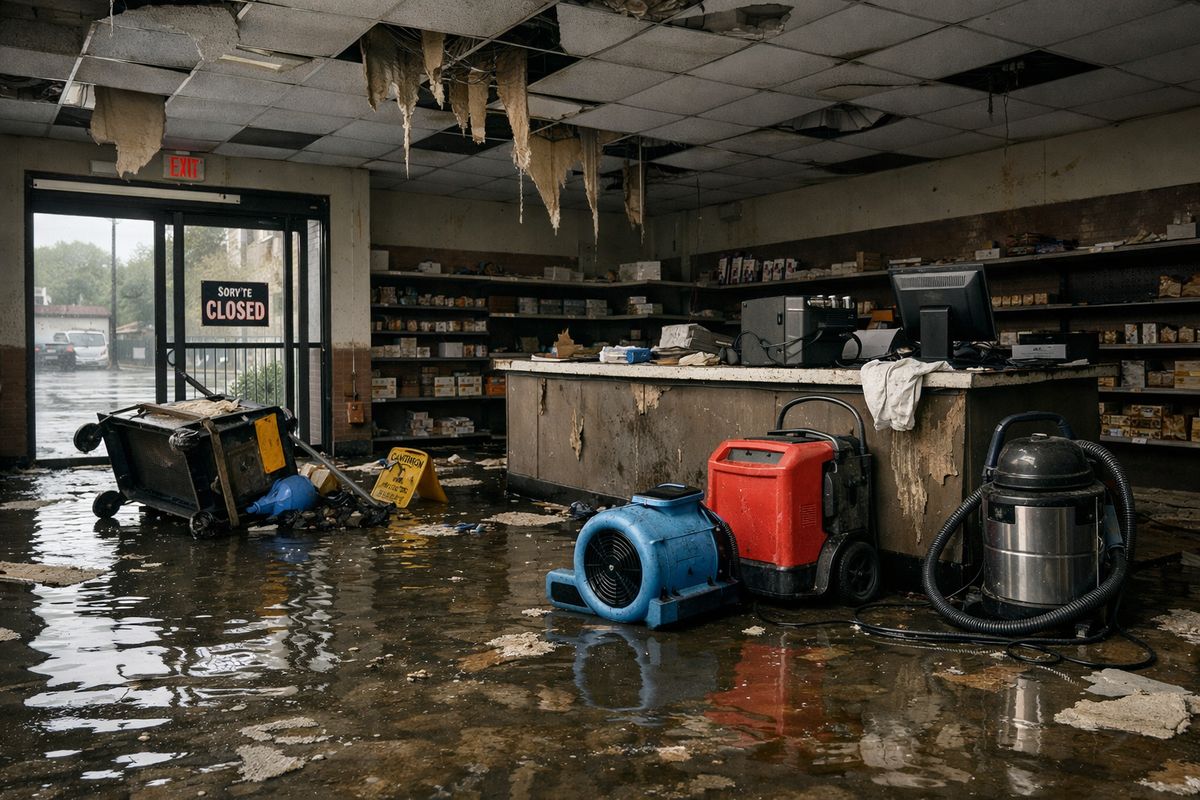
Picture a roof loss after a busy storm season in coastal Florida. The building is damaged, the business closes, and you assume the interruption coverage will carry you through. Then the contractor backlog stretches for months, permits move slowly, and replacement materials take longer than anyone promised.
Your property limit may pay for repairs up to its cap, but your business interruption limit has its own clock. If recovery takes longer than the policy’s restoration period and extended indemnity allows, income loss can keep going after insurance stops. That gap is where a “covered claim” still becomes a financial mess.
A ransomware attack costs more than the cyber endorsement
Now picture a staff member clicking the wrong invoice link. Systems lock up. Orders stop. Email is down. Customer data may be exposed.
The first bills arrive before you even know the full scope. Forensic IT, breach counsel, notification, restoration, business income loss, and possible extortion response all start stacking up. If your policy carries a small cyber endorsement instead of a strong standalone form, the money can vanish almost immediately.
Cyber claims are no longer edge cases. Cyber risk ranks at the top for U.S. businesses for a reason.
An employee claim turns into a six-figure defense bill
An employee alleges wrongful termination, discrimination, or retaliation. Even if you believe the claim is weak, that does not make it cheap.
You still need counsel. You still need to respond. You still need time, records, and strategy. A single EPLI matter can run into six figures largely on defense costs alone, which is why low EPLI limits are so dangerous. The policy does not have to lose in court to run out of money.
How to check whether your limits still make sense
This review is less technical than it sounds. The trick is to start from the loss, not the policy.
Start with your biggest “what if” losses
Ask what would hurt most if it happened this year. A major lawsuit. A full rebuild. Six months of downtime. A breach that shuts systems down. An employee claim that drags on.
Then put numbers on those scenarios. What would it cost to rebuild today, not three years ago? How much income would you lose over six or twelve months? How much would outside legal help cost? Insurance works better when you price the outcome instead of naming the risk in abstract terms.
Review the numbers that changed this year
Look at the facts that actually shifted: revenue, payroll, headcount, property values, inventory, equipment, locations, contracts, and data stored.
Those are the pressure points. If any of them changed materially, your limits may need to move with them. Auto exposure deserves the same treatment if staff now deliver, travel more, or use company vehicles, which is often where vehicle-related risk starts growing quietly.
Look for sublimits hiding inside broader coverage
A sublimit is a smaller cap inside a larger policy for a specific kind of loss.
This is where people get surprised. Your property policy may include sewer backup, spoilage, equipment breakdown, or civil authority coverage, but only up to a much smaller amount. Your crime or cyber coverage may include social engineering, but with a cap far below the money movement you actually handle.
Sublimits are not bad by default. They are bad when you mistake them for full protection.
Ways to fix limits that are too low without guessing
Raising every limit blindly is not the answer. Matching limits to real exposure is.
Raise key limits where the exposure is obvious
Some fixes are straightforward. If your property values are outdated, raise the property limit. If customer traffic or job-site exposure increased, revisit liability. If downtime would wreck cash flow, strengthen business interruption. If your business lives on software and stored data, increase cyber.
Direct fixes work well when the weak spot is obvious and measurable.
Add standalone policies when endorsements are too thin
Sometimes the issue is not just the amount. It is the structure.
A small endorsement tucked into a package policy may not be enough for cyber, EPLI, flood, professional liability, or equipment breakdown. Standalone policies often bring broader wording, better first-party and third-party protection, and higher available limits where you actually need them.
That matters with flood in particular because many businesses assume standard property forms will handle it. Often, they will not.
Use umbrella coverage to extend protection
Umbrella coverage can be a cost-effective way to add serious protection above core liability policies.
If a large injury claim or auto case is your biggest balance-sheet threat, umbrella may give you more breathing room without rebuilding the entire insurance program from scratch. Just make sure the underlying policies and umbrella terms line up properly. More top-layer limit does not help much if the base coverage beneath it has holes.
Improve documentation and risk controls
Better limits and better underwriting often go together.
Safety programs, employee training, cybersecurity tools, verified backups, continuity planning, updated building details, and accurate values all help carriers understand your risk more clearly. Insurers are using more detailed data now, and strong risk controls can support better pricing while you keep limits where they should be.
Common questions about business insurance limits
Is a business Owner’s policy enough by itself?
A BOP can be a solid foundation, especially for smaller operations. But it often covers fewer risks than people assume, and its built-in cyber or specialty protections may be too small to matter in a real claim. It is a starting point, not a complete answer for every business.
How often should you review your limits?
At least once a year. Also review them anytime you hire, expand, move, add equipment, increase inventory, change services, sign bigger contracts, or store more customer data. Insurance should keep pace with change, not trail behind it.
Does having the “right” coverage mean your limit is high enough?
No. Coverage answers what the policy can respond to. The limit answers how much money is available once it does respond. You need both. A covered claim can still leave a large unpaid balance if the limit is too low.
What’s The easiest first step if you’re not sure?
Pull your declarations page and spend 30 minutes reviewing each limit, each sublimit, and the biggest business changes from the last year. Then compare the numbers to your real loss potential, not just what you paid last renewal.
What changes once you understand your limits
Once you understand your limits, insurance stops feeling like a stack of forms and starts feeling like a practical financial tool.
You can spot the difference between “covered” and “protected.” You can see where one bad storm, one lawsuit, or one cyber event would hit hardest. And you can fix the weak spots before a claim does it for you. Try one simple thing today: pull your declarations page and look for any limit that has stayed flat while your business kept moving.